

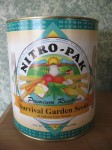
Survival Seeds in a Can-9 Years Later
I, like some of you, have in the past purchased canned or packed “survival seeds” that are advertised as if they can be saved and planted when disaster hits. Mine came from Nitro Pak Preparedness Center and were packed for 2000 (yep, that’s 9 years ago). We didn’t get into the Y2K scare, so it’s really just coincidence that that is the year they were packed for, but I’m guessing I’m not the only one that has a can or two of these seeds sitting on the food room shelf waiting to plant them until I “need” them. They are non-hybrid seeds, meaning they produce seed that will grow the same plant it came from when it is planted, so you are supposed to be able to harvest your seeds and grow more food next year with it. I decided this year to plant as many non-hybrids or heirloom varieties as I can in my garden, so in addition to purchasing more heirloom seeds, I pulled out these cans and opened them up. Inside was an oxygen pack, the seed packs, and a 2 page front/back printed set of instructions for gathering seed that left me slightly confused (this is easy to do). Some of the varieties like beans and corn are annuals. These will produce seed this fall. Some like carrots, spinach, and beets are Biennial and will not produce seeds until NEXT growing season. So I have to wait until next year to get seeds off some of these plants. That means that if it were a survival situation, I could only eat some of the beets this year, then I’d have to leave some to go to seed next year (in some cases the biennials need special care to overwinter). Then I’d be able to plant more the following year. Are you seeing where this might be a problem if you’re starving? In thinking I needed a little more information in my non-hybrid garden adventure, I searched out a book to help me and ended up with Seed to Seed by Suzanne Ashworth
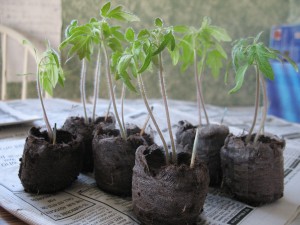 I didn’t know what to expect from the 9 year old seeds, so I’ve planted some in Jiffy pots along with my seeds packed for this year, and here’s what’s happened so far. (My kids helped plant the seeds, so that may give a small margin of error to my findings.) The tomato seeds are Rutgers tomatoes and came up very well. They actually had better germination rates than the new seeds I purchased this year. I had 100% germination on these, and the plants are all healthy.
 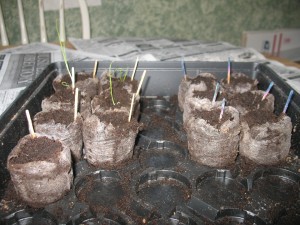 The peppers are bell peppers and the onions are White Lisbon Bunching onions. These pictures were taken 22 days after planting. I had exactly Zero pepper plants sprout (while the new pepper varieties all had 100% germination) and 4 of 56 onion seeds sprout. The onion sprouts are very weak compared to the onion sprouts from this year’s seed and I don’t think I will even be transplanting them into the garden. I’ve direct seeded the spinach, lettuce, and carrot seeds into the garden this week, and will be seeding the beans in the next few weeks, so I’ll report on those when and if they sprout :)
 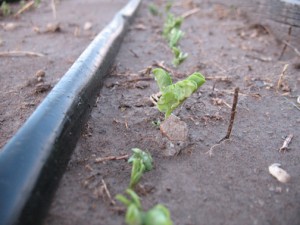 I did not plant the pea seeds from the can as I wanted all one variety of peas to make maintaining seed purity easier on me and I had more of another variety, but I did plant peas that were packed for 2001 and have been kept in the food room in a plastic grocery sack (no special, oxygen free environment for these seeds). The picture was taken a couple of weeks ago. I laid the seed in the rows pretty thick, so cannot calculate germination percent, but can say that I have quite a few peas coming up from those old seeds. So if you have an old can of survival seeds in your preps, you might consider replacing them unless you can live on peas and tomatoes. And going along with Wade’s Skills as a Prep post, if you have purchased non hybrid seeds to grow as a “survival garden”, you may want to plant them now and learn how to save your seed before you need to. If you mess it up now, you can buy more seeds, but if you mess it up when that’s all you have it will be more than just an inconvenience.