

Survival Food: How to Make Parched Corn
Corn - You can boil it, toast it, roast it, parch it, eat it raw, grill it, steam it, stew it, cream it, grind it, feed humans or animals with it. You can eat it fresh, freeze it, can it, dry it, drink it or burn it in your vehicle. It’s a diverse food that can serve a prepper well if they know what to do with it. Parched corn was eaten regularly by American Indians warriors and hunters as an extremely lightweight, high energy trail food long before European explorers showed up and was a typical food or treat for the pioneers as well. It is the original “trail snack” and can also be ground up for stews or soups. If you’re asking “What is parched corn” at this point, let me fill you in. Parched corn is a lot like the partly popped kernels in popcorn - you know, the ones with the white stripes down them - except it’s a lot more tender, tastes a bit better and doesn’t get stuck in your teeth. It’s kind of like corn nuts - except it’s the real thing! Making parched corn is really quite simple - you just take dried corn kernels and roast them over heat and eat them. But even then there is a variety of things you can do with it - you can season it with onion salt, regular salt, Lowry’s salt, garlic salt - or whatever flavorings you like. The way I was taught (and the way I’m about to teach) was to cover it in brown sugar - which makes it kind of like eating caramel corn. My good friend, Justin H. who is a primitive survivalist and one of my heroes, taught me to keep parched corn in a cloth bag and carry it in all my survival kits, I suggest you do the same. Here is a step by step pictorial on how to make parched corn.
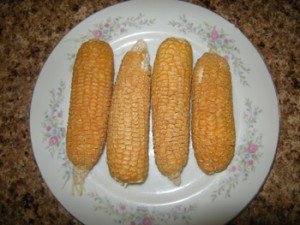
- Your corn must be dried. There are several ways you can dry it but the most common I know of is to hang it in a dry area in your home. It can also be dehydrated in your oven. Once dried, you can store the corn on the cob just about forever - this is a great way to preserve your harvest.
- Remove the kernels from the cob - this should be as simple as lightly rubbing the cob. If it is difficult to get the kernels to drop off the cob, your corn is probably not dry enough.
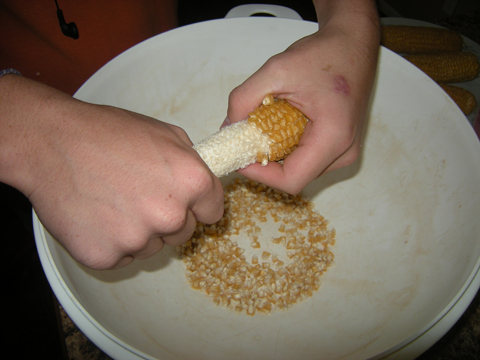
- After cleaning all the cobs, you should have a container full of corn
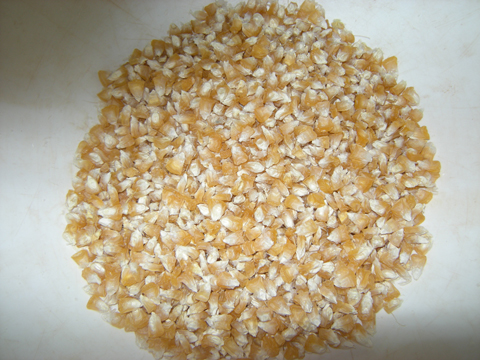
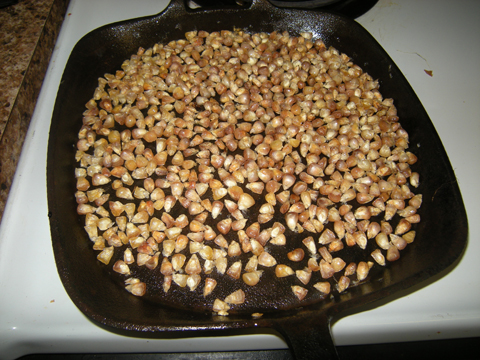
- Set for around medium heat and oil your skillet, once the oil has heated, coat the entire skillet with oil and drain the excess (we’re not deep frying here). Add enough corn kernels to almost cover the bottom of the skillet. Your kernels should only be one level high. Notice in this picture that the kernels are yellow/white and look rather flat.
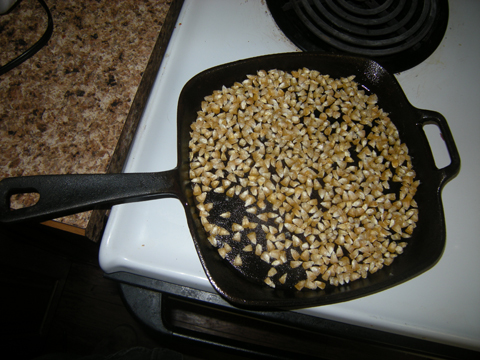
- Stir continuously. I prefer to shake the pan back and forth, similar to popping corn over a fire. After 1 - 5 minutes, the corn will begin to turn light brown and will puff up like it’s being filled with air. It will also begin to pop. A few pops is fine but if it start popping a lot, you probably have too much heat. Notice the difference in color and shape of the corn in this picture and the previous one. If you are adding seasoning you can do it during this part of the process or you can do it in the next step.
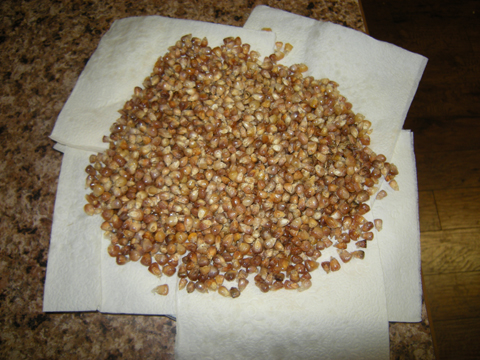
- Once the corn is browned and has a nice round shape, remove it from the heat and place it on a container with a paper towel on it to absorb the excess oil. Dab the corn with another paper towel to make sure there is as little oil left on it as possible.
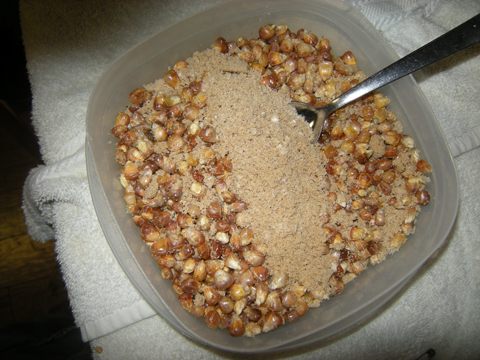
- Once the oil has been absorbed, you can move it to a container to hold it all in. At this point, I add some brown sugar in, put the lid on and shake it. You can add any other flavorings at this point if you didn’t do it previously.
- The final product of parched brown sugar corn.
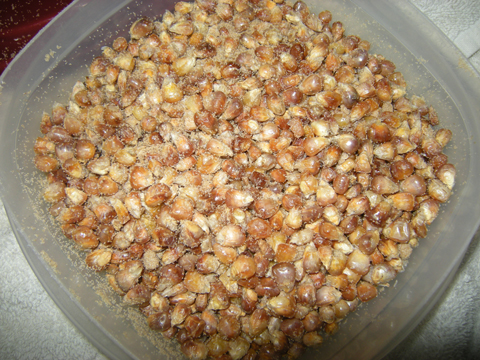
- In just a few minutes you can easily create a high energy delicious trail food that can sustain you for quite a long time - and doesn’t need preservatives or crinkly packaging to keep it from going bad!