

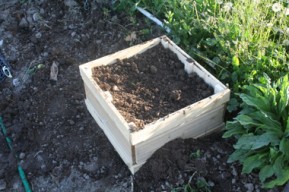
Potato Grow Boxes
This year I was going to plant “garbage can potatoes”. If you haven’t heard of this method it goes like this: plant potatoes in a garbage can, add 8 inches of dirt and when the plant grows out of the dirt and is 8 inches tall, add another 8 inches of soil and so on. This method is supposed to yield about 50 pounds of potatoes in the garbage can. An alternate method is to use old tires, a bucket, or a large trench that you continually add soil to. Here’s why this works: Potatoes have two growing stages, rooting and flowering. When exposed to sunlight (growing up out of the dirt) the plant goes to flowering mode. When deprived of sunlight (by being covered with dirt or in your pantry for too long) the plant changes to root mode and burrows up to the sun. Lateral roots (which the potatoes grow on) are formed along the main root. By forcing the plant to continue growing upwards, you create a huge taproot system from which multiple lateral roots will form, yielding many more potatoes than other methods. By working in 8 inch increments you keep the plant from suffocating and allow it to grow huge. Here are a couple of great resources on growing potatoes. I was all prepared to put a bunch of tires in my garden and then decided it would be too ugly! As Jayce and I talked about it, we came up with the idea of being able to access the potatoes to get a few out without disturbing all the other ones growing. We decided to mimic bee hive boxes but add a sliding door to two sides of the box. This way I could slide the door open, reach in and pull out some spuds without having to harvest all 50 pounds at once. This seemed like a great way to “store” our potatoes! They could stay in their growing environment and we could eat them as we needed to. So what I’m about to show you is NOT guaranteed to work! I’m actually going to be experimenting with several different methods this week and I’ll report on them all later. We’re pretty sure this will work though, you’re welcome to try it out!
Starting Potato Seeds
To properly seed your potatoes you need to get a few pounds of certified seed portatoes (you can use regular store bought ones but they may turn out weird) from your local nursery. To entice them to sprout, put them out in the sun or under a grow light for about two weeks. 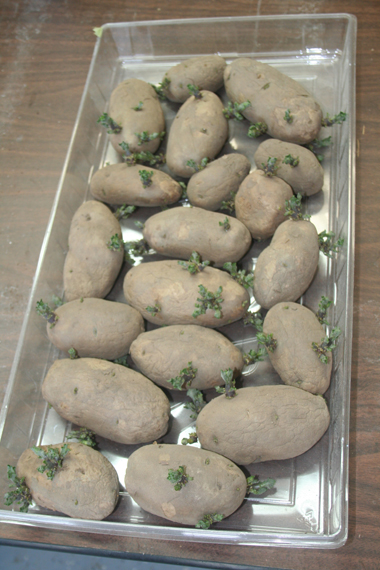 Once they have sufficiently sprouted, cut them into 1 - 2 inch pieces with 2 eyes (sprouts) on each piece.
 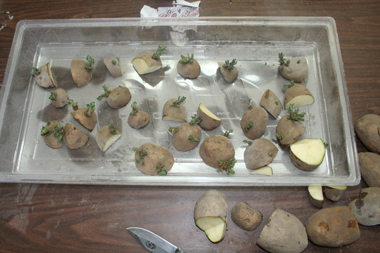 Once cut, you need to let them sit in the light for another two days where they will form a dark, protective layer that keeps them from rotting once planted.
 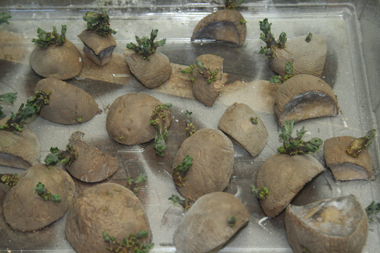 Once you’ve finished these steps your potato seeds are ready to plant!
Building Potato Boxes
This is a pictorial of the boxes I built: 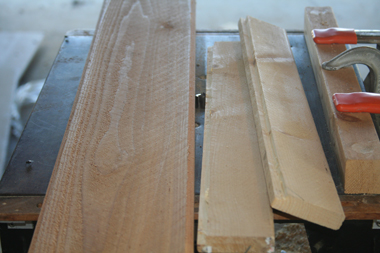 To allow the sides to slide open and for overall joinery, route the edges of your boards to create slide grooves.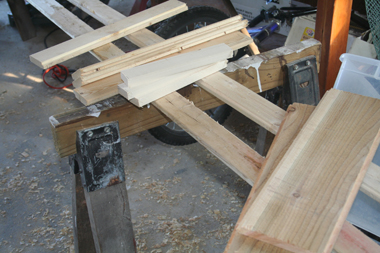
Rip your boards to 18 inch lengths
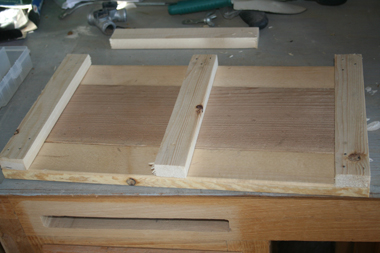
Assemble the side walls using 3 lateral stabilizers so that your joinery is able to slide without slipping back.
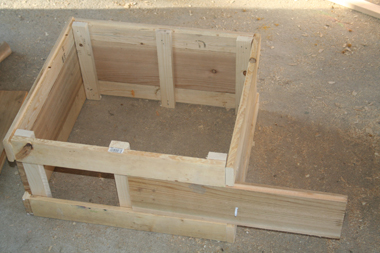
The side wall top and bottom boards have to be notched to allow the facing board to slide past them. The center plank on the side wall needs to be cut at 14.5 inches.
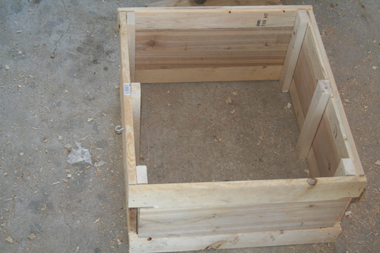
You can see the notching in the side walls here.
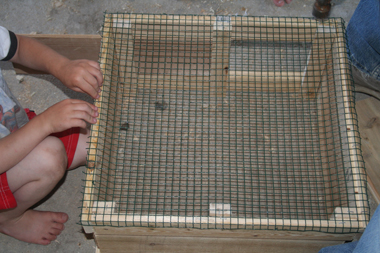
Attach wire to the bottom of the box to allow drainage. Do this only for the bottom box, not the ones you will use to stack!
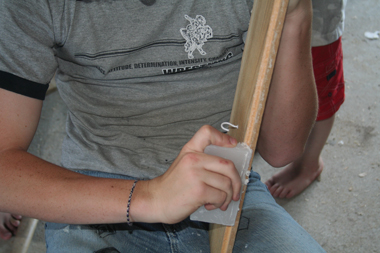
Wax your sliding boards to make them slide easier, also attach something (we used cup hooks) to the board to allow you to grip it for sliding.
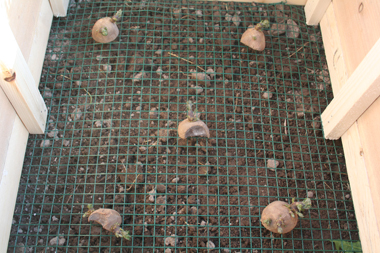
Now you’re ready to plant. Spread a few seeds in the bottom of the box.
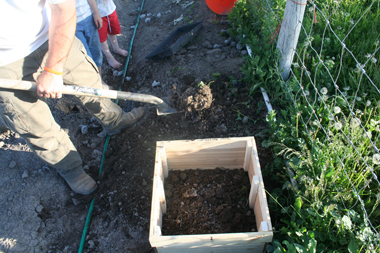
Fill the box with dirt - almost to the top. 8 inches is what you want.
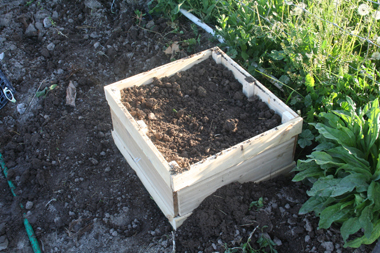
Once you’ve got your box filled with dirt, give it a good soaking and you’re ready to go!
Once the plant sprouts through the top, allow it to grow 8 inches high and then add another box on top and carefully bury it again. Repeat this a few times (I plan to go 4 boxes high).
As I mentioned earlier, this is an experiment. I think it will work but I’m not positive. I’ll be trying several other methods and some variations on this box design. Once I get the other methods started I’ll post about them as well.