

Get Home Bag
Recently I took some time to rotate a few items in my ‘Get Home Bag’ that I keep in my car. The seasons were changing here, and they require different items to fill the bags purpose. As I was changing, I realized I should take a few pictures to post on here (and satisfy the requests of a few friends wanting to know what I have). With that in mind here’s a basic breakdown of my winter Get Home Bag.
Purpose:
I live a fair distance from my work now (oh how I long to telecommute again!). Around 25 miles one way, around a lake, across a river, through several places that have limited road options. How do I know this? Well, I would say everybody should be very familiar with every alternate route between their home and most common destinations, because you never know when you will need them. I have needed mine. Beyond a natural curiosity and desire to optimize my commute, my neighborhood often requires it because it has a population that overwhelms the local road infrastructure on a good day. Add in an accident, or bad weather and it becomes horrid. Get worse weather, and you can actually shut down access to our town. It’s happened before, it will happen again. Throw in an earthquake, and there will be no cars heading home. Whatever your locally preferred disaster, would you be able to get home to your wonderful food storage?
Considerations:
There are several things to consider when creating a Bug Out type kit for your car that you must take care of for your kit to be any good to you. The first point is what are you getting ready for. My kit as I stated is to get me home from work in case I can’t drive. It’s a very likely situation with our current infrastructure. Now I have a different kit in my wife’s vehicle. She doesn’t travel as often, or as far as I do, but she will almost always have our kids with her. During a blizzard last year which shut down all roads into town, she was able to keep our kids fed, entertained, and the youngest in clean diapers, even though they hadn’t planned on being out so many hours. This was all because her kit was ready for that type of situation, sheltering in place until help could come. Secondly, what space do you have? Do you carpool, or will it stay in a large trunk? Do you ride a bike or drive a truck? All of these change what size your kit can be, and what security it might have. Thirdly, just how far are you from home, and how easily could you travel that distance? Don’t kid yourself with whatever shape you were in a few years ago, think about now. Fourth, weather. Around here it’s likely really hot, or really cold at the times I’d most likely need my kit. The contents must meet the needs of that weather, which means I have to rotate it. Finally, long-term storability. Some items, especially food items, dont’ last long in a car. That nice MRE you threw in the trunk last summer is probably toast now. The extreme temperature changes combined with the effects of the car make it go bad fast. [ad#ad-1]
The Bag:
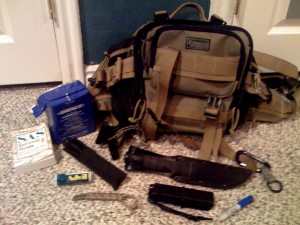
My bag itself is a Maxpedition DevilDog. It’s a larger sized butt-pack, that also has a very comfortable shoulder strap when wanted. It’s large enough to hold what I feel I need for this usage, without being too large, or looking out of place. Plus it’s a Maxpedition, which I can’t say enough good about. Also pictured are some of the first items of the kit.
- Datrex Bars : Emergency Calories. 3600 of them actually. Sealed, long lasting, and can handle the heat. They aren’t a lot, but would give me a minimal calorie count for my expected travel time in worst conditions. They are very compact, and lightweight. There are several types of emergency bars out there, and some local preparedness shops let you taste them before buying. I highly suggest this, as some are nasty (but hey, worst case). These one actually taste quite good, like a coconut macaroon.
- SAS Survival Guide : Excellent smaller version of the full handbook. Get both, read them before there is a problem. Then keep the guide in your bug out bag or get home bag
- Advil : Muscle and general pain relief. Not used to walking a lot? You’ll be thinking about this after a day.
- Mini-Mag light : With LED bulb. Great inexpensive light, durable, has a holster too so I can move it to my belt.
- Ka-Bar : One of my favorite fixed blade knives, in the smaller 5” version. What’s important here is a strong, reliable knife.
- Gerber Strike Force : My favorite flint starter. It doesn’t break, and I have enough practice to know I can start a fire easily with it.
- CountyCom Micro Widgy bar : Utility tool, very handy to have, wrapped in Paracord 550
- Mini sharpie : Ability to leave notes that will last most anywhere.
Fire and food:
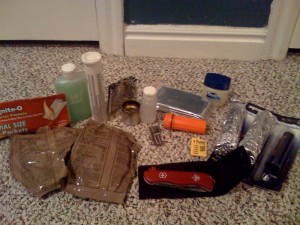 Fire starter packet : a stable, lightweight firestarter. This is a redundant item that I just threw in to try sometime
- Camp Soap : You want to stay clean, and need to clean up your dishes to not get sick
- Tube of Fire starters : Originally an “airborne” brand vitamin, now perfect for holding several Vaseline soaked cotton balls for starting fires.
- Two MRE snacks : This rotation I have a ‘wheat bread’ and ‘mint chocolate cookie’. Carbs that pack well.
- Swiss Army Knife : my trusty (an old) Victorinox Scout edition, with the lock blade.
- P-51 can opener : Yeah, I have an opener on the knife, but I keep one of these everywhere. Even though I currently don’t have and cans in my kit.
- Gram Weenie Stove : very small alcohol stove, with windshield, and small amount of alcohol in squirt bottle.
- Matches : Strike anywhere, waterproof, and in waterproof case.
- Emergency Mylar blanket : Some warmth, and shelter.
- Vaseline : can make more fire starters, or heal wind/sun chapped lips. Usually just have a chapstick tube here, but didnt’ have an extra handy this rotation, and this was sitting there. (And yes, chapstick is great for making firestarters too, try it!)
- Two emergency candles: light, heat, help with the fire. Wrapped in Aluminum Foil. Keeps them from melting as much, and from getting stuff around them waxy. In emergency the foil can be used to help cook.
- Water filter straw : My route home goes around a large freshwater lake, and crosses a couple streams and rivers. I’ll need the water, but it’s not clean. I dont’ want to pack all the fuel necessary to boil that much water.
[ad#ao-banner]
Utility:
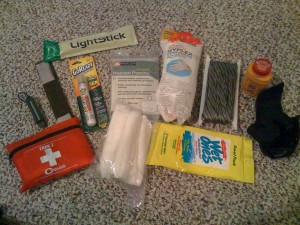 Sharpening stone
- Mini Prybar : sharpened edge, and good steel. Something you can use to pry out stuff you don’t want to risk a knife blade on
- First Aid Kit : Covers the basics. Store bought basic package with a few extras (moleskin specifically)
- Chemical lightstick : No batteries necessary, help me be seen if that’s what I need.
- Bug Spray + Sunscreen : Blistering Utah sun in the summer, bouncing off the snow in the winter. And did I mention the lake and streams. Lots of mosquitos if I stay by the water.
- Poncho : gotta stay dry
- Toilet Paper : Do I really need to explain this?
- Latex Gloves : Any biological material around? Treating a wound from an accident?
- Wet Wipes : Better than toilet paper when out and about, and can clean self too.
- Rope : Well, cord. 100 feet of paracord.
- Foot powder : It’s a long walk, I will do whatever necessary to prevent blisters from starting
- Micro monacle : just a very small 4x zoom
Bulk:
-
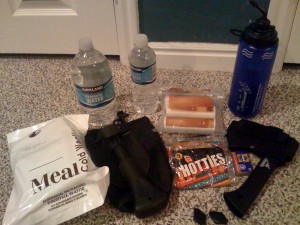 Two water bottles : Start with some clean water, in bottles I can reuse for this trip.
 -
Water Filter Bottle : Katadyn water filter in a bottle.
-
MRE : Specifically a Cold Weather MRE, which is freeze dried, so it can last even in the car heat. Also has a lot more calories. Hard to find, and pricier though, so I don’t have many of these. Only one in the kit.
-
More TP
-
Two Micro lights : attach to the outside of the bag, redundancy is key here.
-
Hotties : Chemical Heat packs for the hands/feet/body. Spending the night out in a blizzard with my ‘work clothes’ isn’t comfy.
-
Folding Shovel
-
Mini Hatchet : I have the Gerber Back Axe, Small, lightweight, very well made
-
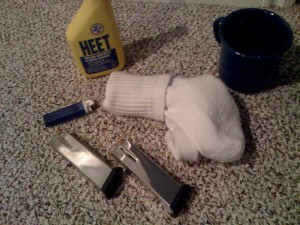 HEET bottle : Works very well in alcohol stoves. Sealed container that I can then refill my mini-squirt bottle to load the stove. This will fuel that stove for quite a while.
 -
Metal Cup : It is the pot for the stove, and the dish to eat from
-
Lighter : While I love flints, and my matches are good, a simple lighter is just easier to start with.
-
Extra socks : Long walk, water crossings, snow. Gotta keep those feet dry and comfy. Can be mittens too if needed.
-
Two Extra Mags : Not pictured is the extra .22-mag, depending on what I’m “wearing” that day.
[ad#ao-banner]
Extra Gear:
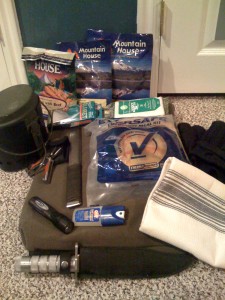 I know that winter travels will take quite a bit more out of me, and a lot more time than a summer trip. Also I have a lot more chances of needing my kit when stuck for an extended time, possibly not going home. So i plan accordingly. These extra items don’t fit in my pack, but would help me last longer if sticking around, or could attach to the outside of my pack or be worn (or consumed) for longer travels.
- 4 Extra meals : Higher calories. The civilian MRE shown will only be here in the winter. Includes its own chem heater for a hot meal.
- Wool blanket : Heat, even if wet. Can be windproof by freezing it solid for extra shelter.
- Lightweight towel : Keeping dry is keeping warm, also can wrap to keep face protected from wind-chill.
- More bug spray : Not as many bugs out now, but it was in the box.
- More Wipes
- Another Mylar Blanket
- Extra LED flashlight
- Mini pliers tool
- Full Size Prybar
- “Survival” knife
- Cook Kit : Swedish Surplus, Likely need to boil more water. Larger quantities here. Contains larger alcohol stove, alcohol, and utensils inside.
- Snow Gloves
All of this fits inside a small plastic container in the trunk of my car. Added some velcro to the side so it sticks and doesn’t slide around. Now I know this has some redundancy, which is unecessary given that I’m planning on packing to my home, not leaving my supplies. But I am a bit gadget bound. You can do with less, and it’s fine. I like to go the overkill route though. One final note: This kit is also planned around the fact that I EDC a lot of items on myself. My pockets are full, and my work backpack is a whole extra upcoming post. They each have extra items that complement what’s in my kit. Altoid survival tins, Concealed Carry Firearm, Extra flashlight, etc. Please comment on anything you think I might be missing. To start it off, I’ll mention a few things:
- Buillion cubes - small, sodium rich (sweat problems), helps get warmth in you.
- Gatorade single packs - drink mix in single-serving sizes, help get more water down, mask bad flavors, and replenish minerals from sweating.
- Shoes - what if I’m wearing simple sneakers, wouldn’t some hiking boots be nice? yeah I can dream that I can keep extras of nice shoes in my car, ready to be used.
- Chewing Gum or Candy : Quick pick up.